Here’s a confession from someone who runs two laser engravers named after cryptids and can tell you the exact speed and power settings for engraving slate, denim, and at least one material I probably shouldn’t have tested: three hours before I took the best product photo of my life, I looked at my camera and thought, “but what is light.”
Not “how do I use light.” Not “what’s the best lighting setup.” Just a full existential flatline. But what is light.
I can troubleshoot a laser mid-burn. I build apps for fun when I’m supposed to be relaxing. But hand me a real camera and photo editing software and my brain simply left the building.
The problem was that leaving wasn’t an option. I have licensed bookmarks due on Etsy this week (more on those in a second, they’re gorgeous and I’m feral about them), and licensed work means deadlines that don’t care about your feelings.
The Actual Problem With Pretty Dark Things
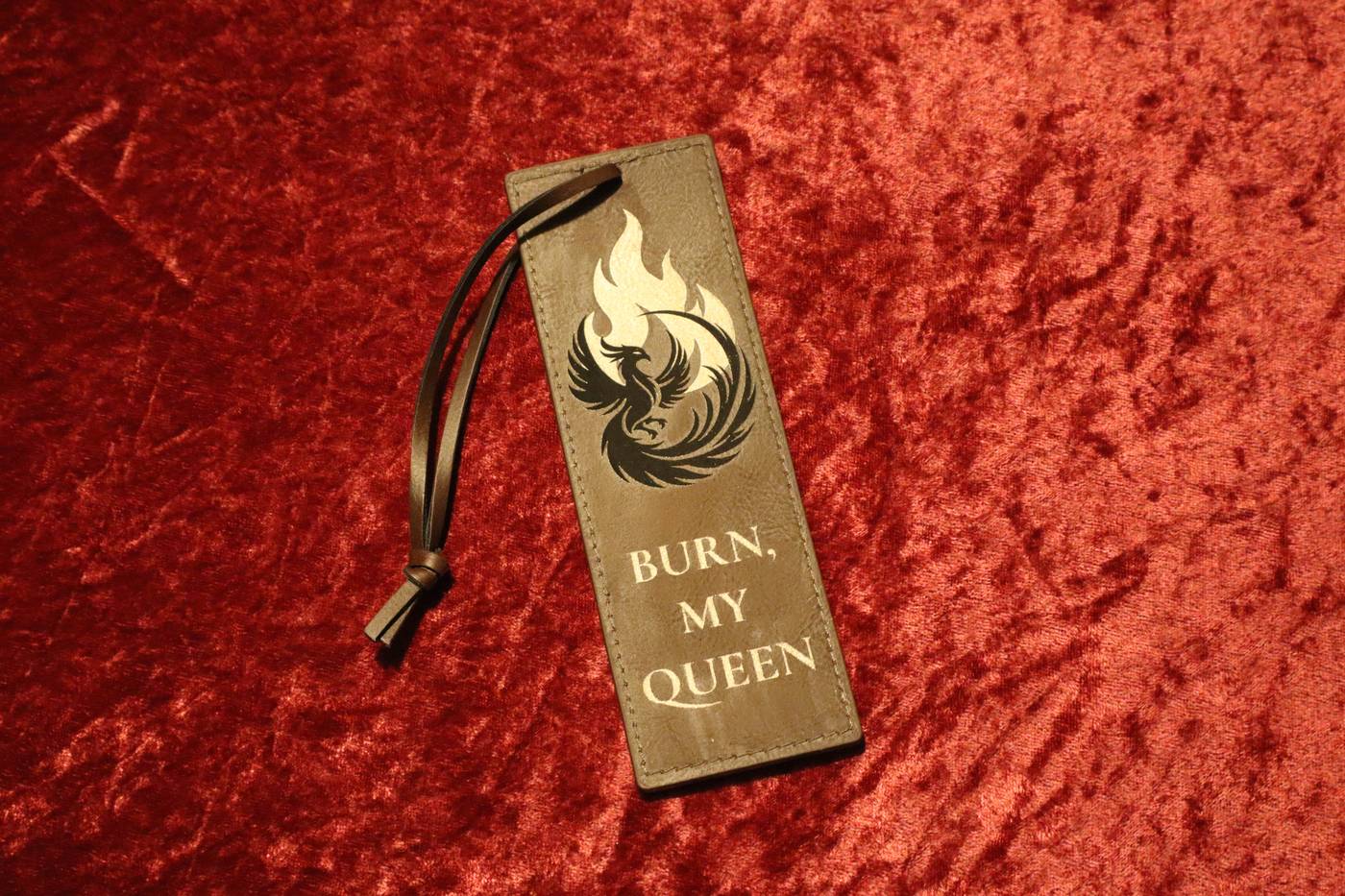
If you make dark products, you already know this pain. Dark engraving on dark leather is the final boss of product photography. You’re asking one light source to do two opposite jobs at once.
The metallic gold tones in an engraving only show up when light bounces off them at an angle, straight into your lens. They’re basically tiny mirrors. Meanwhile, the leather around them wants soft, gentle light, or it blows out into shiny plastic-looking hotspots.
Point a ring light straight at it and you get the worst of both worlds. The gold goes flat beige. The leather glares. The crushed velvet backdrop eats whatever light is left and turns to mud.
And here’s the thing I realized halfway through the night: this is exactly why you don’t see many truly beautiful engraved leather bookmarks on Etsy. It’s not that nobody can make them. It’s that the people with laser skills can’t photograph them, and the people with camera skills aren’t engraving romantasy quotes onto leather at midnight. The moat around this product isn’t a crafting moat. It’s a photography moat.
So I built a bridge. Here’s what actually worked.
The Three Things That Fixed Everything
One: light from the side, not the front. This is called raking light and it changed my whole night. Push your main light off to the side at a lowish angle so it skims across the surface instead of hitting it head-on. The engraving catches the light and flares to life. The gold goes gold. The leather keeps its texture instead of glaring. Your ring light still gets to come to the party, but as fill, softening the shadows, not running the show. Even a cheap desk lamp doing the raking from the side will beat an expensive light pointed straight at your product.
Two: stop letting the camera make decisions. Auto white balance saw my burgundy velvet and panicked, “correcting” every frame a different direction. Some shots came out magenta, some greenish, none matching. Switching to manual, locking the white balance, and freezing the exposure settings meant every frame matched. Boring? Yes. But consistency is the entire secret to the next part.
Three: edit one photo, then make the software do the other forty. This is the Lightroom trick that saved my week, and if you batch-produce anything, I need you to hear this. Edit your best photo completely, masks and all. Then select the whole batch and sync the settings with masking checked. Lightroom doesn’t paste the same mask onto every photo. It re-runs the AI selection on each image’s own subject and applies your adjustments fresh. I was about to hand-build somewhere around six hundred masks like a medieval monk illuminating manuscripts. The machine did it while I made tea.
What Came Out the Other Side
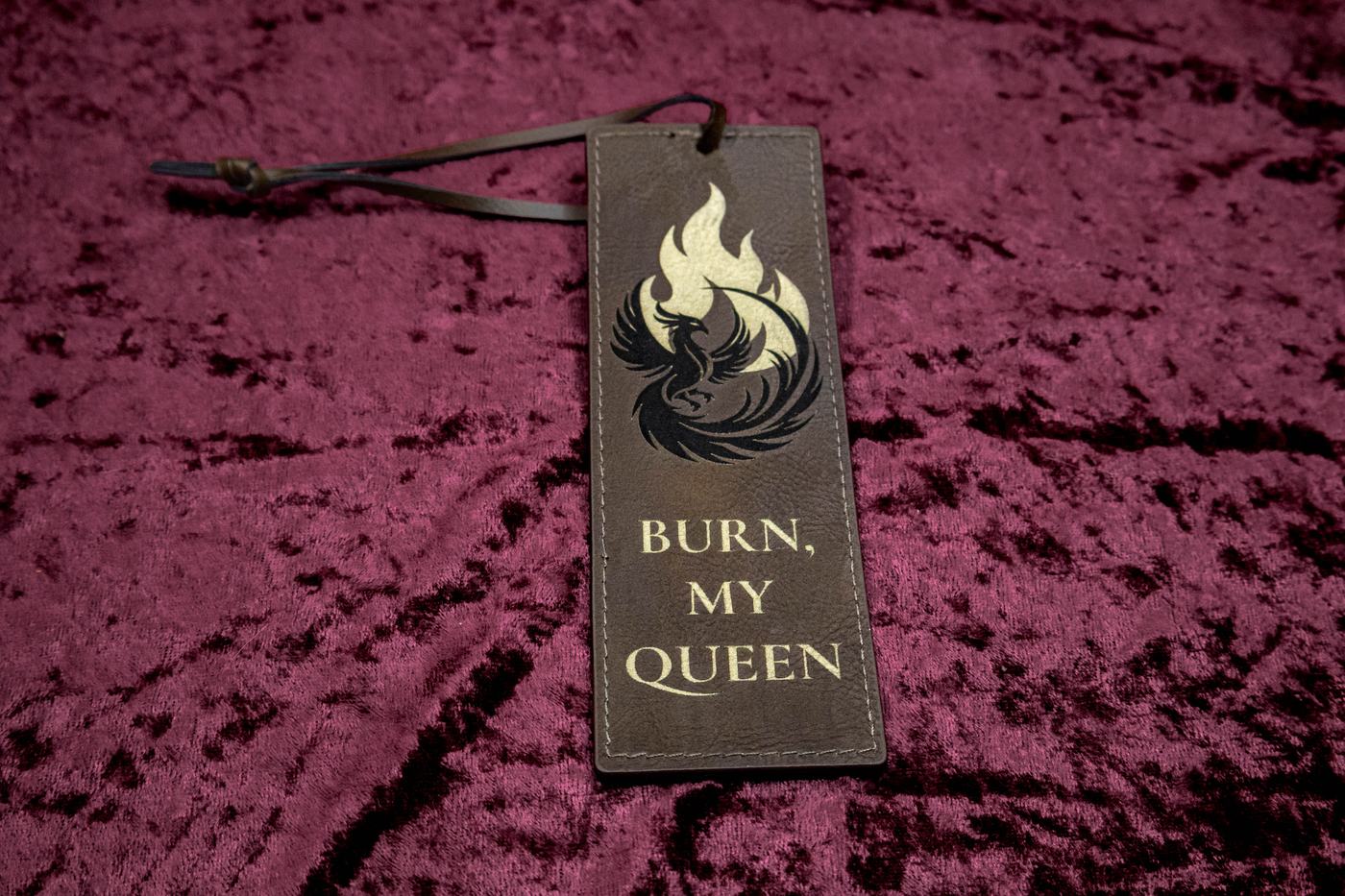
The photos stopped looking like “bookmark on fabric” and started looking like scenes. The leather looks like leather. The gold catches like it’s supposed to. The velvet finally reads as rich jewel-toned burgundy instead of murky purple soup.
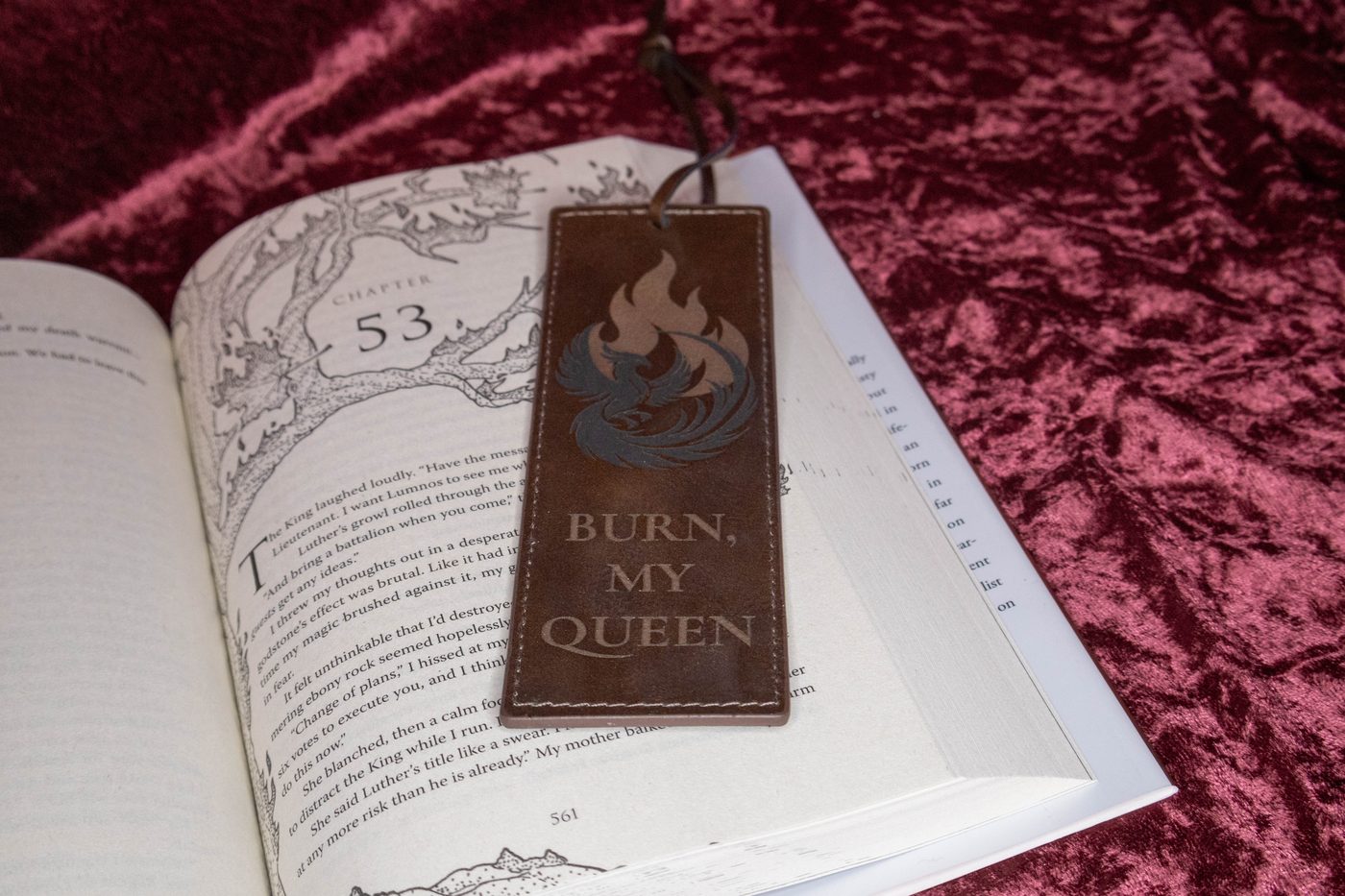
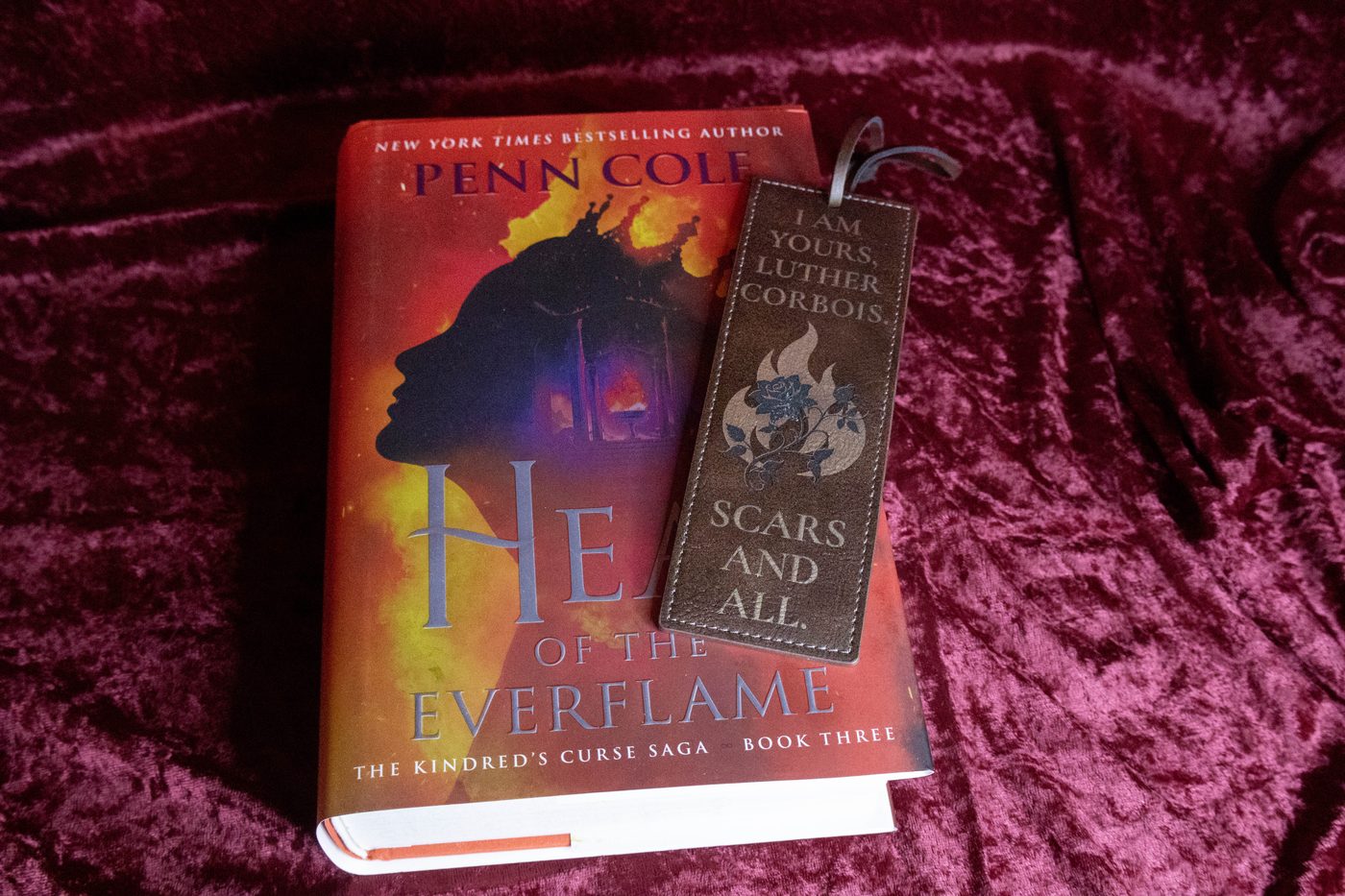
And the products deserved it, because these are my Kindred’s Curse Collection bookmarks, officially licensed Penn Cole merch with quotes that made an entire fandom unwell. Engraved leather, stitched edges, the works. They’re landing in the shop this week, styled on the actual book pages they came from, because it turns out the smoke-art chapter pages make the most unhinged beautiful backdrop I’ve ever used.
The slate coasters and wooden phone stands got the same treatment the same night, and here’s the funny part: after the leather bookmarks, they felt easy. Pale engraving on black slate is high contrast by nature. Light birch on red velvet practically photographs itself. I fought the hardest material first without knowing it, and everything after was downhill.
If Your Photos Are the Thing Holding You Back
You don’t need a photography degree. You don’t need a thousand-dollar lighting kit. You need light from the side, settings that stop changing between frames, and software doing the repetitive work it’s genuinely good at.
Mostly, you need to stop believing the story where you’re “just not a photo person.” I said “but what is light” at nine in the evening and had portfolio shots by midnight, with a faulty ring light, a cubbyhole in a bookshelf, and a camera I’m still learning. The skills you already have transfer. If you can dial in laser settings by changing one variable and watching what happens, congratulations, that’s literally photography. Undo is free and nothing catches fire.
The pretty thing you make deserves photos that make strangers stop scrolling. Go give it some light. From the side.
Neurospice Design Shop makes laser-engraved goods for the dark-humored, the neurospicy, and the emotionally feral. The Kindred’s Curse Collection, officially licensed Penn Cole merch, is live on Etsy now.