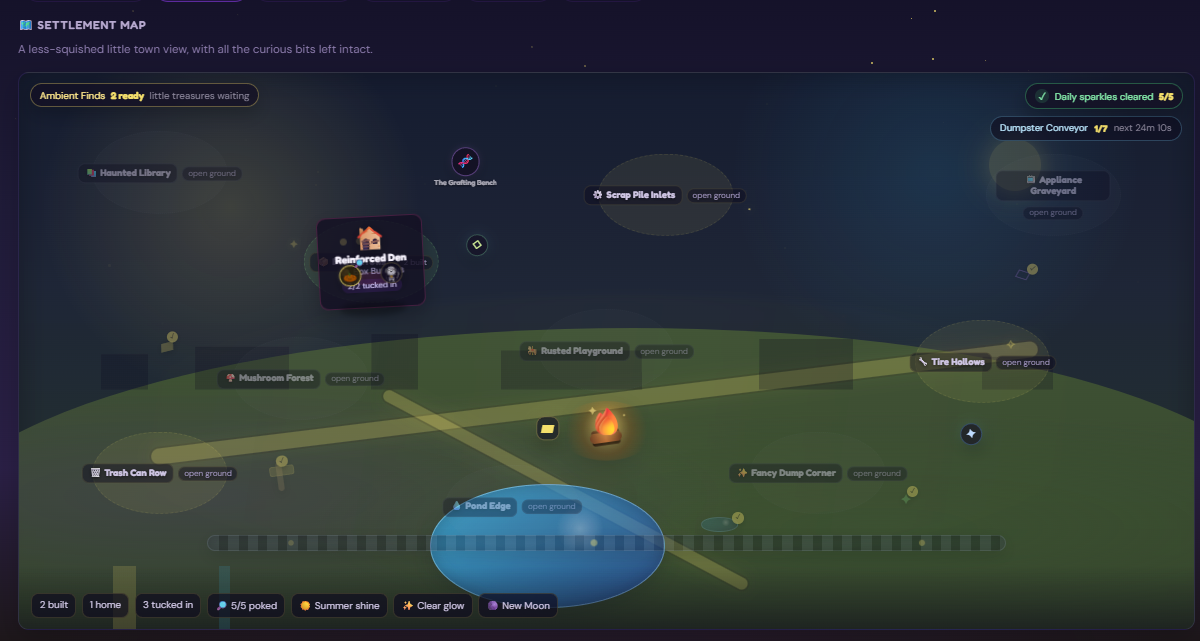
If you read the first post, you know the origin story. Tired night, ADHD brain, creature-collecting dopamine loop bolted onto a task tracker. What started as a medication streak gamification experiment turned into… whatever this is now.
275 creatures. 10 areas. A full settlement you build from scavenged junk. An exercise system where a little purple orb named Motivation watches you ride your bike and writes journal entries about it. A museum that retroactively honors milestones you hit before the museum existed.
I didn’t plan any of that.
The Streak That Changed the Architecture
Here’s the thing nobody tells you about building a wellness app for yourself: you become your own longest-running beta tester. And your brain starts demanding things the developer hadn’t considered.
Around day 30, I realized the task system wasn’t enough. Completing quests felt good, but the world felt static. My creatures sat in the Den. They leveled up. They said funny things. But they didn’t go anywhere.
So I built expeditions. Now your creatures leave, explore areas like the Mushroom Forest or the Appliance Graveyard, and come back with postcards. Little field notes about what they found, how they felt about it, whether the trash had opinions.
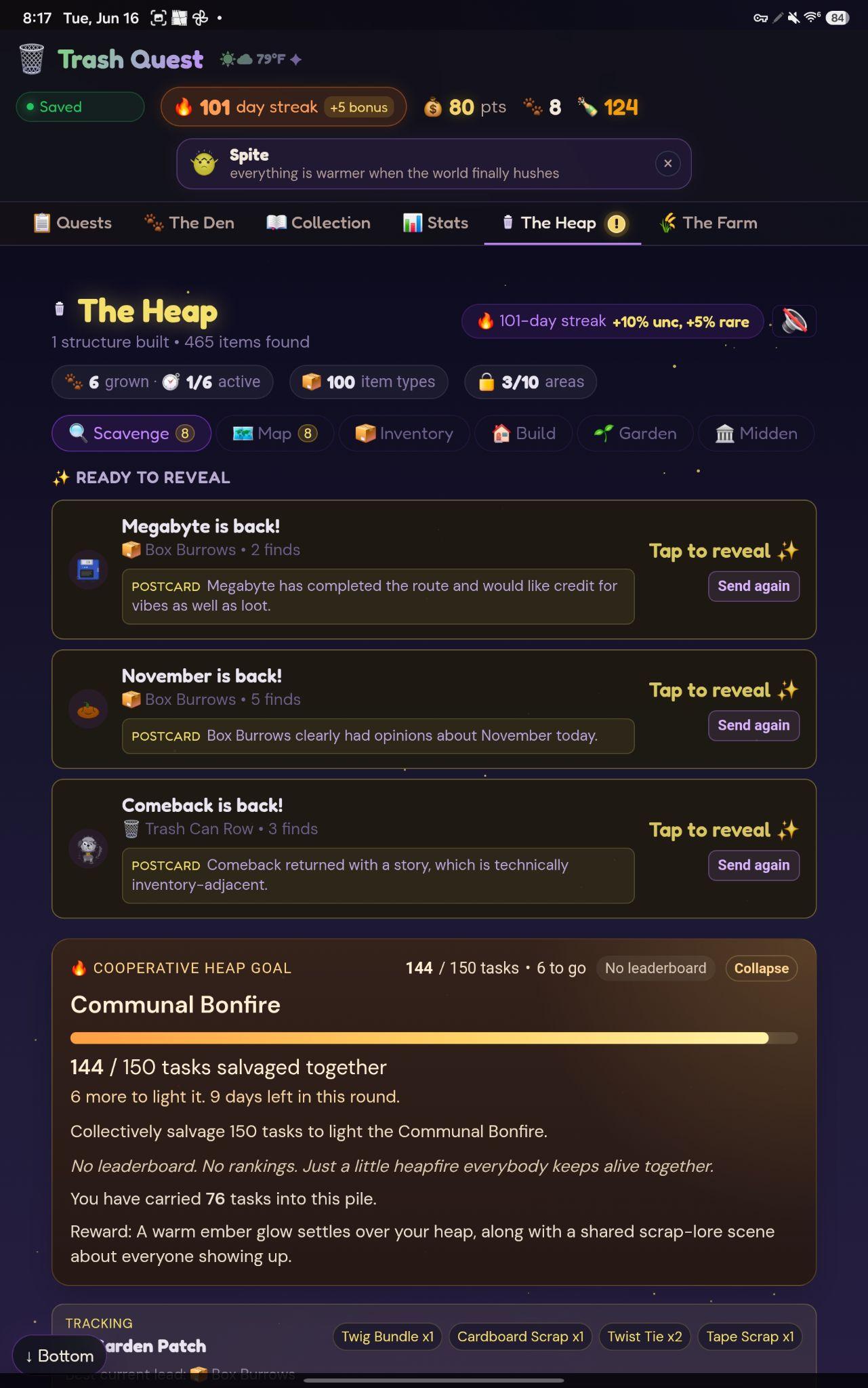
That single feature changed everything. Suddenly the world breathed on its own. Things happened while I was at work. Creatures came back with stories. The app stopped being a to-do list with a skin and started being a place.
The Heap
The Heap is the settlement system. You scavenge materials from expeditions, build structures, and slowly grow a tiny trash civilization from literally nothing.
There’s a map now. Ten areas, each with different creature types and loot pools. The Haunted Library. Scrap Pile Inlets. Fancy Dump Corner (because every junkyard has one nice spot and nobody knows why). A Wandering Cart that moves around selling weird things.
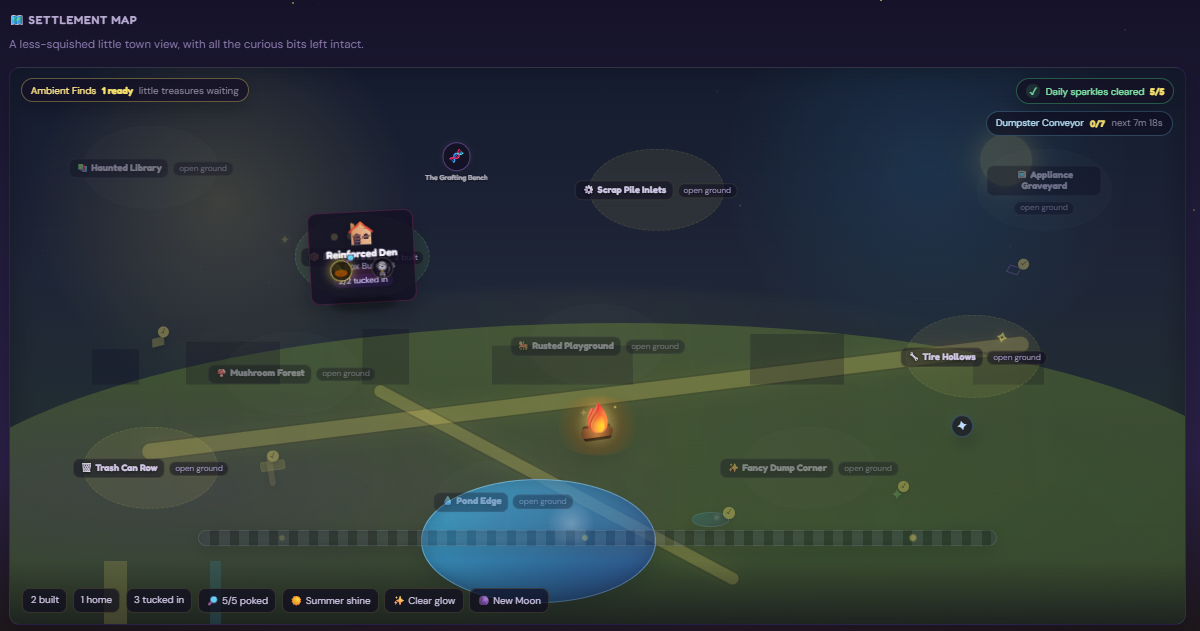
None of this was in the original design document. There wasn’t a design document. There was a tired woman with a mood stabilizer prescription and a text editor, and the app grew the way gardens grow when you stop micromanaging them.
The Communal Bonfire
This is the feature that makes me the most emotional, which is embarrassing because it’s just a progress bar.
The Communal Bonfire is a cooperative goal. Every tester’s completed tasks contribute to a shared pile. When the group hits 150 tasks together, the bonfire lights. No leaderboard. No rankings. Just a little heapfire everybody keeps alive together.
We lit it. 168 tasks salvaged. I carried 91 of them into the pile.
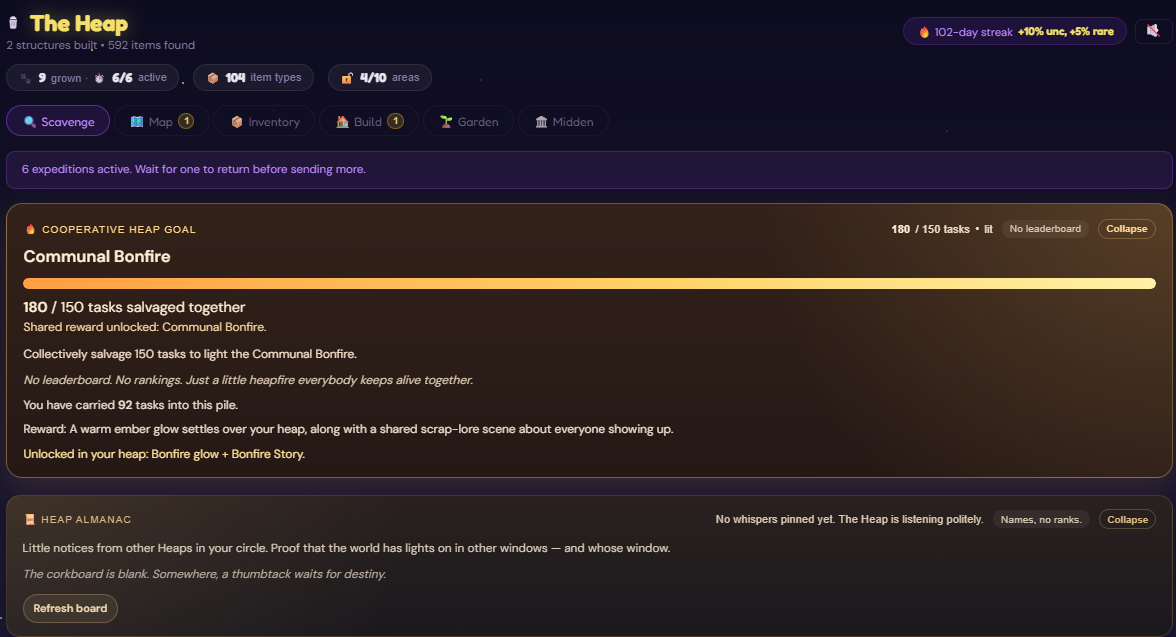
The reward is a warm ember glow over your heap and a shared piece of scrap-lore about everyone showing up. That’s it. A cosmetic glow and a story about community. And I teared up when it happened because I built the damn thing and it still got me.
Spite, My Beloved
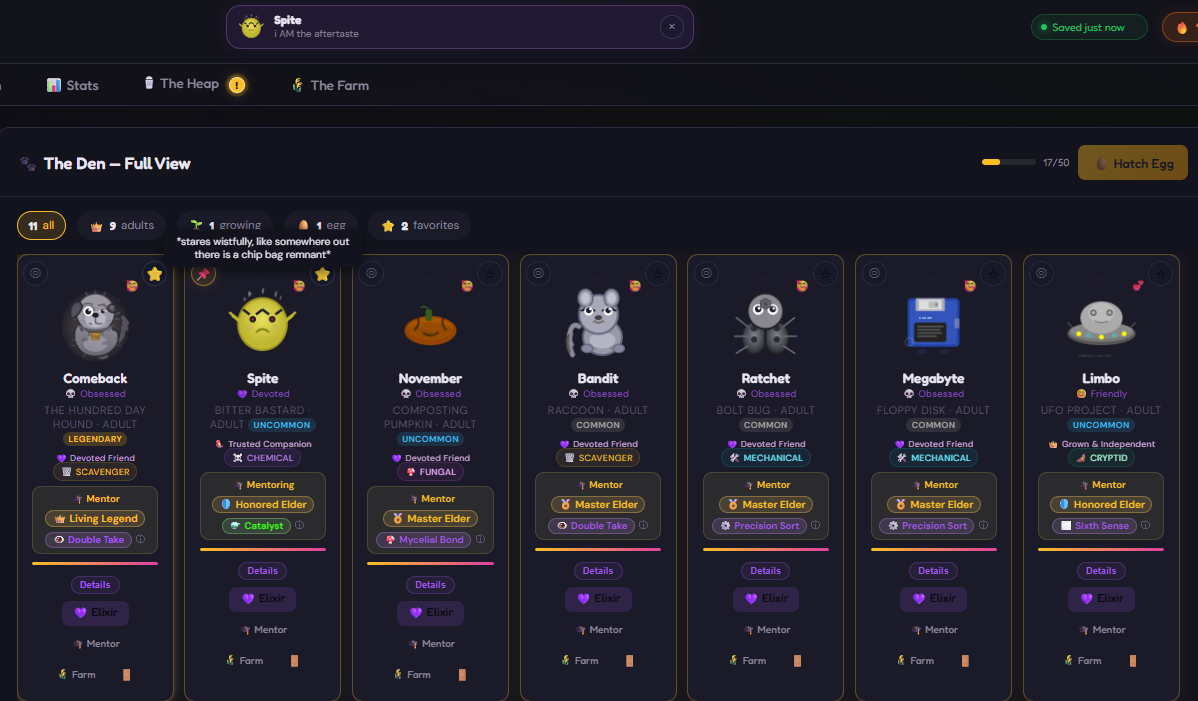
Every player pins a companion creature. Mine is Spite.
Spite is a Bitter Bastard. Chemical affinity. Uncommon rarity. Its interaction quote is “I am what your tongue remembers at 3am.” It has a journal, and here’s what Spite wrote on day 101:
Another day, another opportunity to be extremely perceived. I’m thriving. I lost count at 15. The human is speedrunning life. My aura is particularly volatile today. In a charming way. Halfway to obsessed. The trajectory is clear. I’m not fighting it. 101-day streak. TRIPLE DIGITS. The human has made this a LIFESTYLE. — Spite, day 101
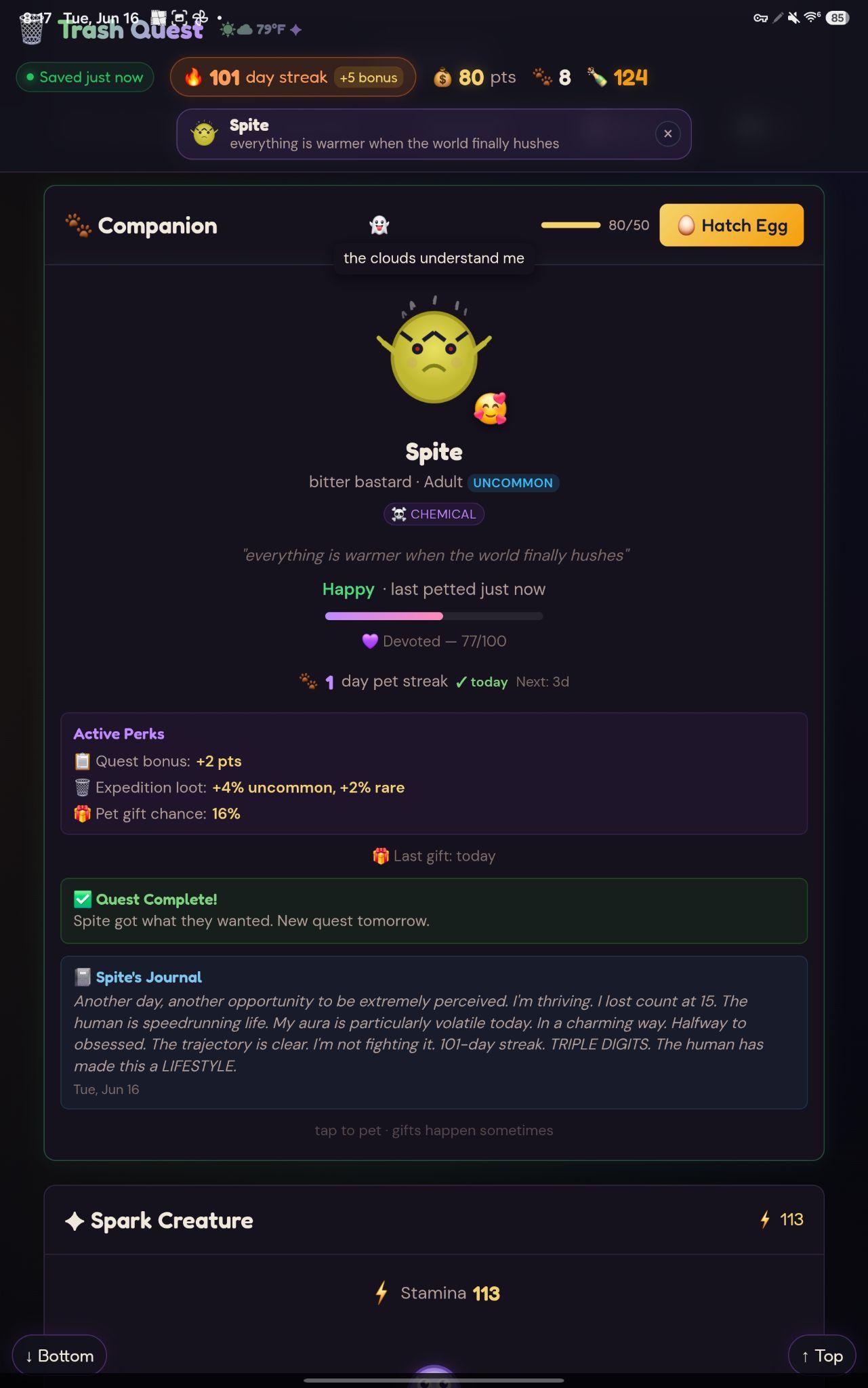
I didn’t write that journal entry on day 101. The system generates them based on your actual streak length, devotion level, and creature personality. Which means Spite independently arrived at “the human has made this a LIFESTYLE” and I have never felt more accurately roasted by my own code.
The Quick Guide
(or: how to not overwhelm new players when your app has 275 creatures)
One of the hardest design problems wasn’t technical. It was emotional.
When you build something this dense, every new user’s first experience is “what the hell am I looking at.” That’s a death sentence for retention. Especially for the exact audience this app is built for, people whose brains already feel overwhelmed by everything.
So I built the Quick Guide. It opens on your first session and says: “You do not need to learn the whole junkyard today.”
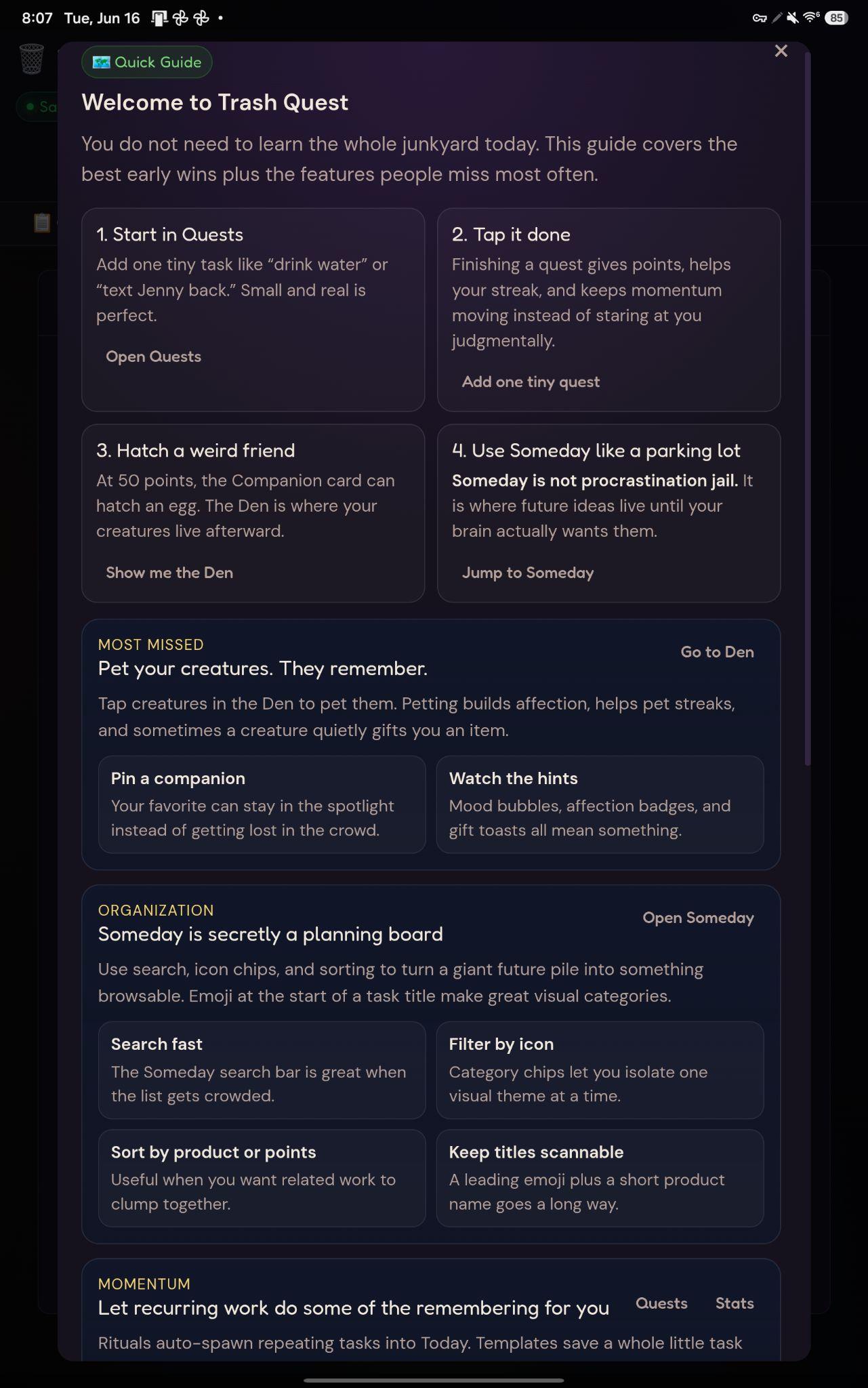
That sentence took me longer to write than most of the code. Because it’s not just onboarding copy. It’s the entire philosophy of the app. You don’t have to do everything. You don’t have to optimize. “Someday is not procrastination jail.” Start with one tiny quest, like “drink water” or “text Jenny back.” That’s enough.
Motivation Watches Everything
The Spark Creature system ties the app to physical movement. Mine is named Motivation, which is either aspirational or deeply ironic depending on the day.
You log exercise (bike rides, walks, whatever moves your body) and it feeds your Spark creature’s stamina. As stamina builds, the creature evolves through forms and hits decision events where you choose its elemental path. Motivation is at Stamina 113 right now, Form I, still Undecided. Four decisions in. “The pattern is emerging.”
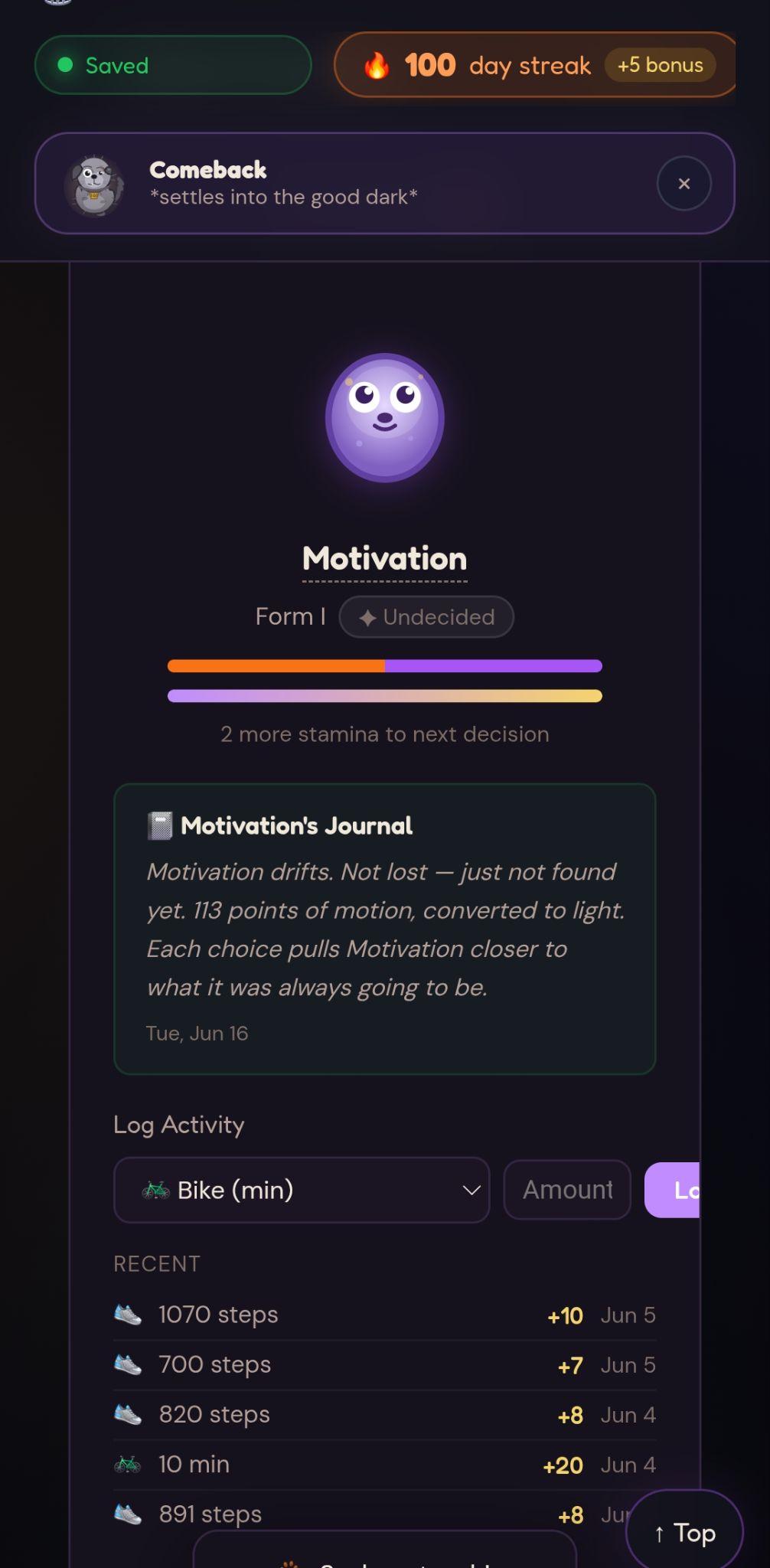
I ride my bike every other day. On the off days, steps count. The system doesn’t punish you for rest days. It just… notices when you show up. And the creature grows because you did.
This was the feature that scared me most to build because wellness apps that gamify exercise usually become shame engines. I didn’t want that. So there’s no penalty for skipping. No streak to break. No red notifications screaming at you for sitting on the couch. Just a little purple orb that says “Motivation watches everything. Learning.”
The Midden
A museum of everything you’ve dragged home. Every first, every milestone, lovingly mounted in junk.
The Midden is an achievement gallery, but calling it that feels wrong. It’s more like a scrapbook. Your first creature, your first expedition, the day you hit a 7-day streak, the day you hit 30. Each one gets a little exhibit with the date.
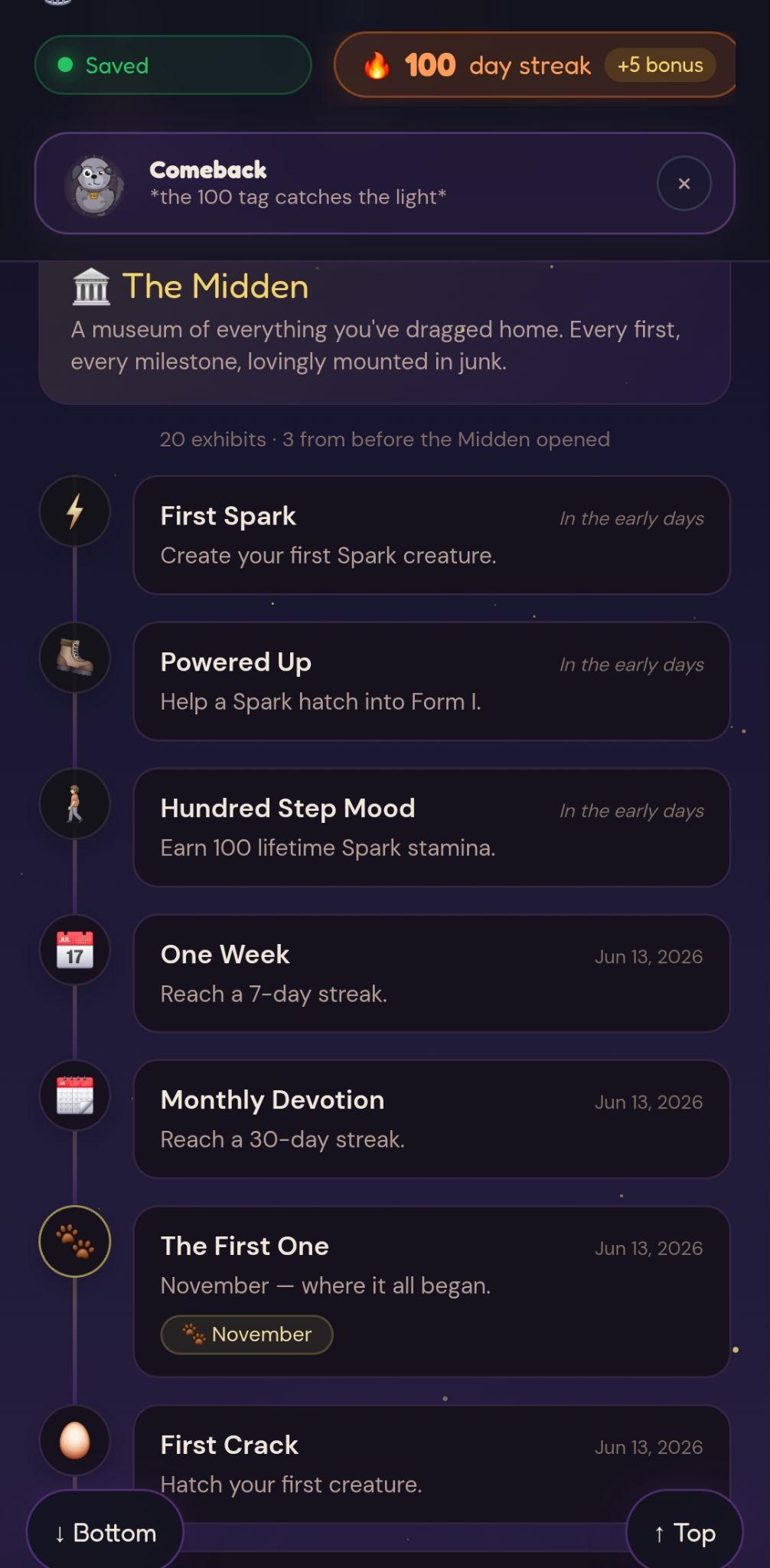
The detail I’m proudest of: it retroactively includes milestones from before the Midden existed. Three of my exhibits say “in the early days” instead of a date, because they happened before I built the feature that tracks them. I could have just skipped those. But the early days mattered too. They should be honored even if nobody was keeping records yet.
Quiet Mail
This one’s small but it matters to me.
Quiet Mail lets you send creatures or spare items to other players with a note. The tagline is “No reply pressure.” You can reach out without demanding a response. Just a little gift and a hello.
I built this because I know what it feels like to want to connect with someone but not have the energy for a full conversation. Sometimes you just want to say “I thought of you” without opening a dialogue that requires maintenance. Quiet Mail is that. A postcard, not a phone call.
What’s Next
Trash Quest is in closed beta right now with about 10 testers, all people who saw me building it and asked to try it. My mom has a 3-day streak. My boss installed it after I accidentally showed her screenshots in a work meeting. My friend Jenny uses it daily.
The Google Play listing just got updated with fresh screenshots. iOS is coming. More creatures are always coming (275 and counting, with 10 different creature affinities across packs that include everything from office supply golems to cryptids to cyberpunk street creatures).
I’m not in a hurry. The app grows when I grow. That was always the point.
If you want to know when it opens up, keep an eye on this blog or find Neurospice Design Shop on your preferred social platform. I’ll be the one covered in glitter and talking to a creature named Spite about our feelings.
Trash Quest was built by one person with ADHD, BPD, and a lot of opinions about how wellness apps usually fail neurodivergent brains. It is not a replacement for therapy, medication, or professional support. It is a junkyard full of creatures that remember when you pet them. Sometimes that’s what you need.